The Core Rule
Every puzzle in Continuous Path Brain Challenge revolves around one central constraint: you must draw a single line that never lifts and never crosses itself. This deceptively simple requirement transforms each level into a test of foresight and planning. Players must think several steps ahead, considering how their line will navigate obstacles and reach every required point. The rule applies uniformly across all mini-games, providing a consistent foundation that makes the game easy to pick up but difficult to master.
Varied Puzzle Objectives
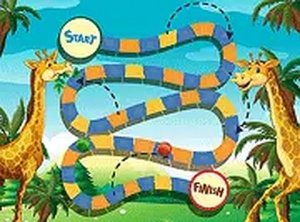
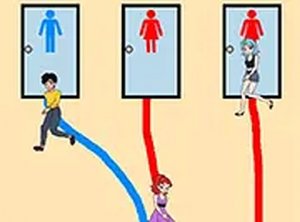
Rather than repeating the same task, the game includes several distinct mini-games that change the goal while keeping the one-line rule. In some levels, you must cover every segment of a visible path, similar to drawing a figure without retracing. Other puzzles ask you to connect matching colored dots in a single stroke. A third type requires guiding objects to specific locations along your line. This variety prevents monotony and encourages players to adapt their strategies for each new challenge.
Visual and Audio Design
The game adopts a clean, minimalist visual style that puts the focus squarely on the puzzle. Colors are used sparingly to highlight important elements like dots or barriers, reducing visual clutter. The interface is uncluttered, with only essential controls visible. Background music, if present, is likely subtle and non-intrusive, supporting a calm, concentrated atmosphere. This design philosophy makes the game suitable for short play sessions or longer periods of focused thinking.
Progression and Difficulty
Levels are arranged to gradually increase in complexity. Early puzzles introduce the basic mechanic with simple paths and few obstacles. As players advance, new elements such as barriers, tighter spaces, and more numerous targets appear. The difficulty curve feels natural, allowing players to build skills incrementally. There is no timer, so each puzzle can be attempted at a comfortable pace. This structure makes the game accessible to beginners while still offering a satisfying challenge for experienced puzzle enthusiasts.
Controls and Feedback
Players interact with the game using a mouse or touch input. Drawing a line is as simple as clicking or tapping and dragging across the screen. The game provides immediate visual feedback: the line appears smoothly as you draw, and a clear indicator shows when a puzzle is solved correctly. If you make a mistake, an undo button lets you remove the last segment, and a restart option resets the level entirely. These controls are responsive and intuitive, ensuring that the focus remains on solving the puzzle rather than struggling with the interface.