What Players Actually Do
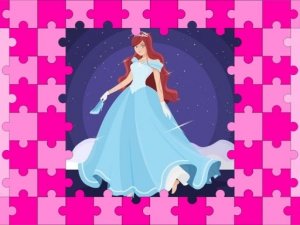
Each session starts with a princess illustration broken into scattered pieces. The child selects a scene, then drags individual pieces toward their correct spots on the board. When a piece lands in the right place, it locks in. The goal is simple: complete the picture. There is no timer, no score to beat, and no penalty for a misplaced piece. That absence of pressure is the point—children can experiment, backtrack, and try again without any consequence.
Difficulty That Grows With the Child
The game offers adjustable difficulty, beginning with very simple puzzles suited to toddlers and moving toward more complex arrangements for older kids. This range means the same game can serve a four-year-old and a seven-year-old, though the specific number of pieces per level is not detailed in the source material. Parents can match the challenge to the child's current ability rather than forcing a fixed difficulty.
Hints and Feedback
Visual hints are available when a child gets stuck. Rather than letting frustration build, the game provides a nudge that keeps the session moving. Completing a puzzle triggers cheerful animations, which serve as the primary reward. There are no stars, coins, or unlockable content described—just the satisfaction of finishing the picture and the positive animation that follows.
Skills in the Background
The mechanics quietly exercise pattern recognition, memory, and problem-solving. Recognizing which piece fits where requires spatial reasoning, and remembering what a partially assembled section looks like supports short-term recall. Hand-eye coordination and concentration develop through the repeated drag-and-drop action. Because the game is designed for children, these cognitive benefits are built into the core loop rather than presented as separate exercises.





Editorial Notes